A Guide to the Zero-Trust Security Framework

You walk into your office on Monday morning, brimming with energy and ready to tackle the week. But instead of important emails, you’re greeted by locked systems and a ransom note demanding payment to release your company’s data. Unfortunately, this isn’t a distant “big business” scenario—it’s increasingly common among small and mid-sized companies. While many SMBs assume that advanced cybersecurity strategies are exclusively for corporate giants, cybercriminals often see smaller organizations as easy targets. Fortunately, the zero-trust security framework offers a fresh way to protect smaller firms from sophisticated attacks—without blowing your entire IT budget.

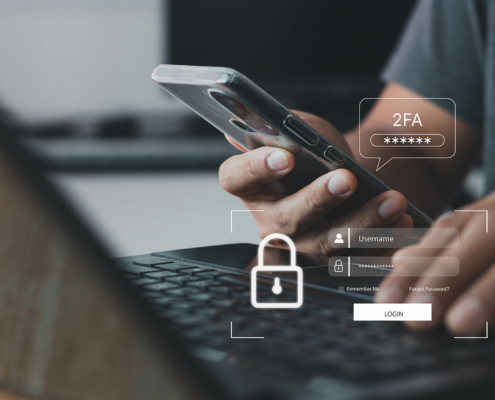
If you’ve never heard of zero trust, or if you’re still relying on a “castle and moat” approach to security, you’ve come to the right place. Read on to discover why this modern security model is gaining traction and how it can be a game-changer for SMBs looking to safeguard their data, customers, and reputation.

Rethinking Security to Move Beyond the Perimeter

For years, many businesses defended their networks with traditional perimeter-based strategies. The idea was simple: build strong firewalls around your systems, and trust everything that’s already inside. While that approach might’ve worked well in the past, it’s no longer enough. As more businesses adopt cloud services, remote working arrangements, and bring-your-own-device (BYOD) policies, the perimeter has become dangerously porous.

The Castle-and-Moat Analogy

  • Old Model: Think of your internal network like a castle behind a moat. Once past the drawbridge (i.e., the firewall), users and devices were generally trusted.
  • Evolving Threats: Cybercriminals quickly learned to find vulnerabilities. Once they gained entry, they could move freely around the network, viewing or stealing data at will.

The zero trust security framework flips that mindset on its head, emphasizing that no one—even on the “inside”—should automatically be considered trustworthy. Every user and every device must continuously prove it’s safe to gain or keep access.

What Is Zero-Trust Security?

Zero trust operates on a foundational principle: “Never trust, always verify.” Rather than assuming a device or user is legitimate because it’s already in your system, zero trust mandates constant validation of credentials, device health, and behaviors. This granular control helps prevent unauthorized lateral movements, internal threats, and external hackers who manage to sneak inside your network.

Micro-Segmentation

Traditional networks might segment one portion of the system from another. Zero trust takes that concept a step further—creating smaller, more controlled zones, each requiring separate authentication.

Strict Access Controls

Roles, policies, and permissions are carefully managed. Users only gain entry to what they genuinely need, rather than having sweeping access to every database or server.

Continuous Authentication

Verifying once at login is no longer enough. Users and devices must re-validate at key intervals or when behavior patterns change. Think of it like an ID check each time you move to a new section of an office building.

Logging and Analytics

Zero-trust solutions typically rely on robust monitoring and analytics. This real-time visibility lets you catch suspicious activities before they morph into major breaches.

Adaptive Policies

Policies adapt to context—location, device type, time of day, or recent behavior. An administrator logging in from the usual office environment will have a smoother experience than someone attempting remote access at odd hours from an unknown location.

Why SMBs Face Heightened Cyber Threats

Small and mid-sized businesses often assume they’re off hackers’ radar, but the numbers tell a different story. Cybercriminals target SMBs more frequently because they expect weaker defenses. Small businesses are also typically less prepared to recover if a breach occurs, which increases the likelihood of a ransom being paid.

Common Vulnerabilities for SMBs

  • Limited Security Budgets: Fewer resources can mean outdated hardware, unpatched software, or minimal staff training—making it easier for intruders to gain access.
  • Lax Access Controls: Without strict oversight, employees may reuse weak passwords or sidestep multi-factor authentication (MFA), creating easy points of entry.
  • Remote Work Gaps: As teams work from home or on the go, personal devices and unprotected Wi-Fi networks put your business data at risk.
  • Growing Compliance Demands: Depending on the industry, SMBs might face regulations like HIPAA, PCI DSS, or GDPR. Meeting these standards without a robust security framework often becomes an uphill battle.

The zero trust security framework directly addresses these issues by minimizing assumptions of trust, segmenting access, and implementing ongoing verification. In doing so, it levels the playing field for SMBs who want to adopt enterprise-grade security approaches without the hefty overhead.

How Zero-Trust Security Differs from Traditional Approaches

Most traditional cybersecurity models operate like a gated community: once you’re inside, you’re trusted to move around freely. This perimeter-based approach focuses on keeping threats out but assumes that users, devices, or applications inside the network are safe—an assumption that no longer holds in today’s threat landscape. With cloud computing, remote work, and mobile devices in play, the network perimeter has essentially disappeared.

Zero trust flips the model. It assumes breaches will happen and builds protections accordingly. Every user, device, and request must be continuously verified—regardless of where it originates. Even internal traffic is subject to strict controls and scrutiny.

Zero Trust vs. Perimeter-Based Security

The differences between a zero-trust approach and a more traditional perimeter-based solution include:

  • Perimeter Model: There are gate checks at the beginning, followed by free rein within the network. Once a user is authenticated, they often have broad access.
  • Zero-Trust Model: There are no free passes. Every action is verified. Access is limited, segmented, and monitored at all times to reduce risk and contain potential threats.

This shift is more secure and smarter. It limits how far an attacker (or insider) can go if they get in and ensures your data is protected from every angle.

Millennium Technology Solution’s experts create tailored solutions that meet the unique needs of SMBs, helping you secure assets without breaking your budget.

Steps to Implement a Zero-Trust Security Framework

Switching to a new security model can feel daunting, especially if you’re already juggling day-to-day operations. However, introducing a zero-trust security framework doesn’t have to be an all-or-nothing affair. You can roll it out step by step, focusing on high-risk areas first.

  1. Assess Your Current Setup: Inventory your assets—servers, applications, data repositories, endpoints—and identify weak spots. This initial assessment reveals where new controls can have the most immediate impact.
  2. Segment Your Network: Break your network into microzones. For example, your finance department’s data server should be off-limits to employees who only handle marketing. Each segment requires its own authentication and security policies.
  3. Adopt Strict Access Controls: Implement the principle of least privilege. Give users only the permissions they need to do their specific jobs. Combine it with multi-factor authentication (MFA) wherever possible.
  4. Monitor and Analyze: Deploy a real-time analytics platform to watch for abnormal behaviors. Unusual login times, rapid file transfers, or devices connecting from strange locations should all raise red flags.
  5. Educate Your Employees: Even the most advanced technology fails if employees are easily tricked by phishing emails or persist in using weak passwords. Provide regular cybersecurity training so the entire organization stays vigilant.
  6. Refine and Expand:  Zero trust isn’t a one-and-done installation. It’s an evolving approach. As your business grows or changes tools, you’ll need to revisit your security configuration, expand micro-segmentation, and update policies to reflect new realities.

Viewing zero trust as an ongoing journey rather than a single milestone helps SMBs gradually transition from outdated models, staying agile and resilient in the face of emerging threats.

Zero Trust in Action

To illustrate the power of zero trust, let’s consider a couple of scenarios that highlight how it thwarts cyber threats before they spiral out of control.

Scenario 1: A Phishing Attack Aimed at Finance

Phishing emails remain a top entry point for cyberattacks. Without internal barriers, one click can expose critical systems.

  • Old Approach: A finance employee clicks on a phishing email link, inadvertently installing malware. The virus moves laterally across the network, accessing payroll records and financial data. By the time IT notices suspicious activity, it’s too late—critical files are compromised.
  • Zero-Trust Approach: Micro-segmentation isolates the finance system from the rest of the network. When an employee accidentally downloads malware, it cannot access secure data. Continuous monitoring flags unusual activity and isolates the infected device, minimizing damage.

Scenario 2: Insider Threat from a Disgruntled Employee

Insider threats are hard to catch if access isn’t restricted as roles change.

  • Old Approach: An unhappy staff member who still has access to vital systems decides to steal customer lists. Because they’re already inside, no one questions the data downloads until customers start receiving phishing calls from fraudsters.
  • Zero-Trust Approach: The ex-employee’s credentials lose privileges after changes in their role. Their attempts to access certain files trigger real-time alerts. Security logs, combined with micro-segmentation, stop a data heist before it begins.

These examples highlight why adopting a zero trust security framework can dramatically improve the prevention of both external and internal breaches.

Millennium Technology Solutions Is Your Expert Ally in Zero Trust

Shifting to a zero trust model can feel complex, especially if you’re juggling other priorities. At Millennium Technology Solutions, we demystify the process, offering tailored strategies that slot seamlessly into your existing ecosystem. From initial audits to fine-tuned policy development, our team ensures you remain protected every step of the way.

Don’t let limited resources or outdated systems stop you from protecting what matters most. Contact Millennium Technology Solutions today, and let us show you how the zero trust security framework can bring powerful, cost-effective protection to your SMB. Your data, customers, and reputation deserve nothing less.

More Like This

How SAML Multi-Factor Authentication Made Easier for Businesses
The Biggest Cybersecurity Trends for 2025
What Is Drive Encryption and Why Does It Matter
How Secure Is Two-Factor Authentication
A person demonstrating digital security with a hand gesture, showcasing a lock icon on a shield in a technology-focused environment
Malicious software, virus and cybercrime graphic