Still Relying on Passwords? Why 2FA Security Is a Non-Negotiable in 2025

If you’re still relying on passwords as your first and only line of defense, it’s time to face the facts: the bad guys have caught up. Passwords alone are no match for today’s sophisticated cyber threats. And in 2025, two-factor authentication (2FA) is a business essential.

Implementing 2FA security is easier, more affordable, and more effective than ever. This guide breaks down why 2FA matters, how it works, and how you can roll it out smoothly (especially with help from experts like Millennium Technology Solutions).

Why Passwords Alone Aren’t Enough Anymore

Let’s be blunt: passwords are no longer safe on their own. Even the strongest passwords can be stolen, guessed, reused, or phished. And once a cybercriminal has access to just one of your systems, they can pivot to others in minutes.

Consider these realities:

  • Over 80% of hacking-related breaches involve stolen or weak credentials.
  • Employees often reuse passwords across platforms, increasing exposure.
  • Phishing attacks are more convincing than ever, tricking even savvy users.

A password is just one piece of the puzzle. If that piece gets compromised, your entire system could fall. That’s where 2FA security steps in and shuts the door.

What Is 2FA Security and How Does It Work?

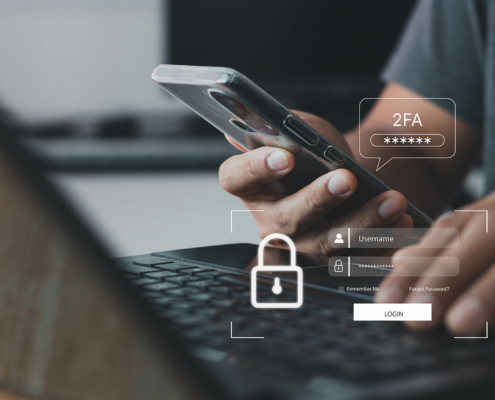
Two-factor authentication (2FA) security enhances your defense by requiring two forms of verification before granting access to an account or system. It’s a critical barrier that makes it much harder for cybercriminals to breach your network, even with a valid password.

Instead of relying on a single password (which can be stolen, guessed, or leaked), 2FA prompts users to confirm their identity through a second, independent method. This layered approach drastically reduces your attack surface and ensures that even compromised credentials don’t open the door to your business.

Common 2FA Scenarios Include:

SMS Verification

After entering a password, the user receives a unique, time-sensitive code via text message. This method is simple to use and widely supported, though it’s slightly less secure than other options due to potential SIM-swap attacks.

Authentication Apps

Apps like Google Authenticator, Authy, or Duo Mobile generate rotating security codes. These are more secure than SMS and don’t rely on cellular networks; perfect for employees on the go.

Biometrics

Biometric authentication, such as fingerprint scans or facial recognition, adds a personal touch to security. These methods are increasingly common in mobile environments and hard to replicate.

Hardware Tokens

These physical devices, such as USB keys or NFC-enabled key fobs, generate or confirm login codes. They’re nearly impossible to spoof and are often used in high-security environments.

No matter the method, 2FA security makes it exponentially harder for unauthorized users to gain access. It’s about better security and smarter, layered defense that grows with your business.


Breaches That Could Have Been Prevented With 2FA

To drive home how critical 2FA security really is, let’s walk through a few breach scenarios that could easily play out in a modern business setting:

Scenario 1: The Phished Finance Department

A finance employee receives a convincing email that mimics a vendor invoice. They click the link and unknowingly enter their login credentials into a fake site. Without 2FA, attackers now have everything they need to access payment systems—and they move quickly, redirecting funds before anyone realizes what’s happened.

With 2FA: Even if the attacker has the password, they’re blocked at the second authentication checkpoint. No 2FA code? No access. Funds stay where they belong.

Scenario 2: The Stolen Laptop

Picture this: A sales manager’s laptop is stolen during a layover. The device was set to auto-login for convenience, and without 2FA, the thief now has immediate access to internal dashboards, emails, and client data.

With 2FA: The system prompts for a second verification method. Without the user’s authentication app or biometric ID, the thief hits a wall. Data stays protected, and IT gets a chance to lock down the device remotely.

Scenario 3: Credential Stuffing Chaos

In this situation, cybercriminals take leaked email/password combinations from previous breaches and try logging into business platforms. Since password reuse is common, they strike gold, gaining access to employee accounts in minutes.

With 2FA: Passwords alone don’t cut it. Even if they match, the attacker can’t get past the second gate. Your business avoids becoming the next breach headline.

2FA as a Core Part of a Cybersecurity Strategy

Two-factor authentication is a key pillar in a modern, forward-thinking security stack. And if your business isn’t taking it seriously yet, it’s time to rethink that.

  • Defense in Depth: 2FA is a critical layer in a multi-tiered defense strategy. Even if a password is compromised, this secondary gate blocks unauthorized access and gives IT teams time to respond.
  • Zero Trust Compatibility: In a Zero Trust security framework, trust is never assumed, even inside your network. 2FA enforces that principle by demanding proof of identity every time.
  • Compliance and Insurance: Regulatory bodies and cyber insurers are raising the bar. Implementing 2FA can help meet compliance standards and may even lower your cybersecurity insurance premiums.
  • User Awareness: When companies roll out 2FA, it often sparks broader conversations about safe digital habits. That awareness becomes a ripple effect, changing company culture in a good way.

2FA doesn’t operate in isolation. It integrates seamlessly with other cybersecurity defenses like endpoint protection, secure email gateways, cloud infrastructure policies, and access control tools. It’s a safeguard that reinforces your entire cybersecurity posture.

Don’t wait for a breach to make 2FA a priority. Millennium Technology Solutions helps small businesses implement robust 2FA security quickly and affordably. From setup and employee training to ongoing support, we’ll make your authentication airtight. 

What to Expect When Rolling Out 2FA

We get it. Change can raise questions. But implementing 2FA doesn’t have to slow you down. In fact, when done right, it strengthens your team without the headaches. Here’s what a smooth, well-managed rollout actually looks like:

  • Risk Assessment: We start by mapping out your current infrastructure to identify high-value targets—admin accounts, payment systems, sensitive data repositories—so we know where to apply the tightest controls.
  • Tool Selection: Not every 2FA tool fits every business. Whether it’s SMS, mobile apps, biometrics, or physical tokens, the right solution balances security, usability, and scalability.
  • Pilot Program: A small group tests the 2FA solution in a controlled setting before full deployment. We collect feedback, refine usability, and build internal champions to help foster adoption company-wide.
  • Company-Wide Rollout: Once the bugs are worked out, we implement 2FA across your organization  (department by department or all at once, depending on your team’s size and needs) with minimal downtime.
  • Training & Support: A great tool is useless if your team doesn’t know how to use it. That’s why we provide easy-to-follow training, clear documentation, and responsive support to ensure everyone from the CEO to new hires gets on board fast.

When you partner with Millennium, we manage the heavy lifting while keeping your operations humming. You gain protection without the disruption.

Stop Guessing, Start Protecting With Millennium Technology Solutions

Millennium Technology Solutions helps small and mid-sized businesses implement 2FA security as part of a complete, layered cybersecurity approach.

  • We evaluate your current risks
  • Recommend the right authentication method for your team
  • Handle deployment, user setup, and training
  • Provide ongoing support and updates

Security shouldn’t be overwhelming or expensive; with us, it isn’t. If you’re ready to ditch outdated defenses and upgrade to real protection, we’re here to help.

Contact us now to secure your systems, simplify authentication, and future-proof your business with 2FA that works.

More Like This

How SAML Multi-Factor Authentication Made Easier for Businesses
A Guide to the Zero-Trust Security Framework
The Biggest Cybersecurity Trends for 2025
What Is Drive Encryption and Why Does It Matter
How Secure Is Two-Factor Authentication
A person demonstrating digital security with a hand gesture, showcasing a lock icon on a shield in a technology-focused environment